


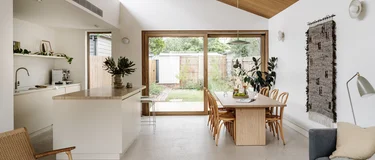
A considered renovation for a heritage cottage
Early engagement secures lowest carbon solution
The owners of a heritage cottage in Melbourne’s Yarraville went the extra mile to secure a low carbon concrete rating for their extension, tailoring both mix and program.
Behind the original facade of their inner Melbourne cottage, the owners completed their home renovation with genuine intent, prioritising solutions that would minimise the build’s environmental impact.
Familiar with sustainable construction methods through their roles as a structural engineer and architect, the owners sought a lower-carbon outcome from the outset, engaging Holcim much earlier than is usual for home renovations. Together, with members of our specialist team, they found a considered and more sustainable way to build.
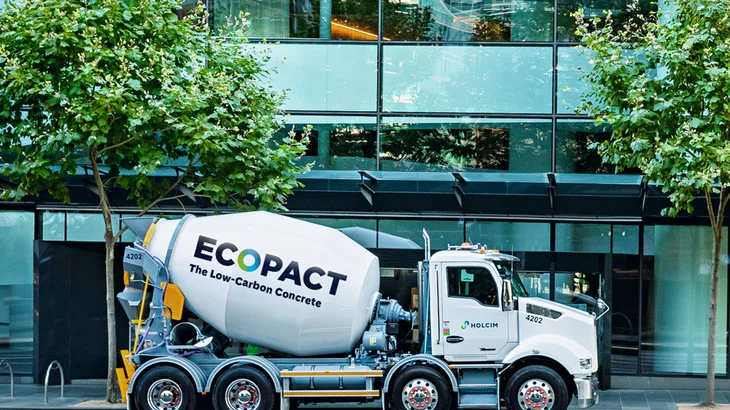
The supply of low carbon, aesthetic and high performing construction materials has been central to Holcim’s offering for close to a decade. With this in mind, the owners engaged Holcim’s National Specifications Manager to find the right combination of sustainable and decorative concrete solutions, starting with Geostone and Holcim’s ECOPact range, which with a carbon reduction rating of at least 30%, was the most logical starting point for this purposeful project.
With a clear outcome in mind, our team and the designers worked together, choosing a tailored ECOPact mix that would achieve a result far beyond the product’s baseline.
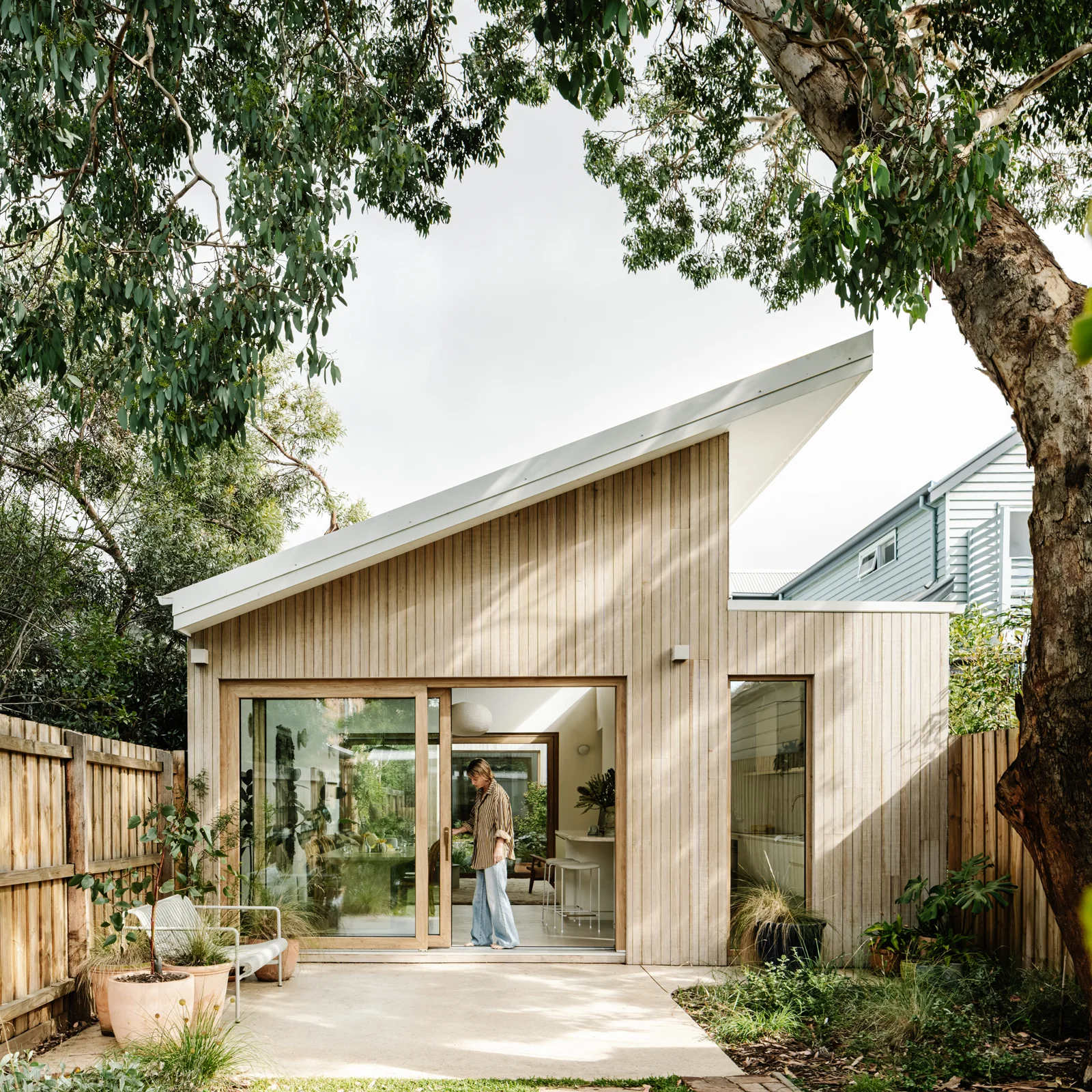
Part of the slab was lifted onto piles so the established eucalypt could stay.
When the owners sought to push the boundaries of the build’s carbon rating even further, Holcim’s tailored ECOPact mix, used for the slab, was paired with an application method that required a non-traditional program, allowing 56 days instead of the standard 28 days to reach its target compressive strength.
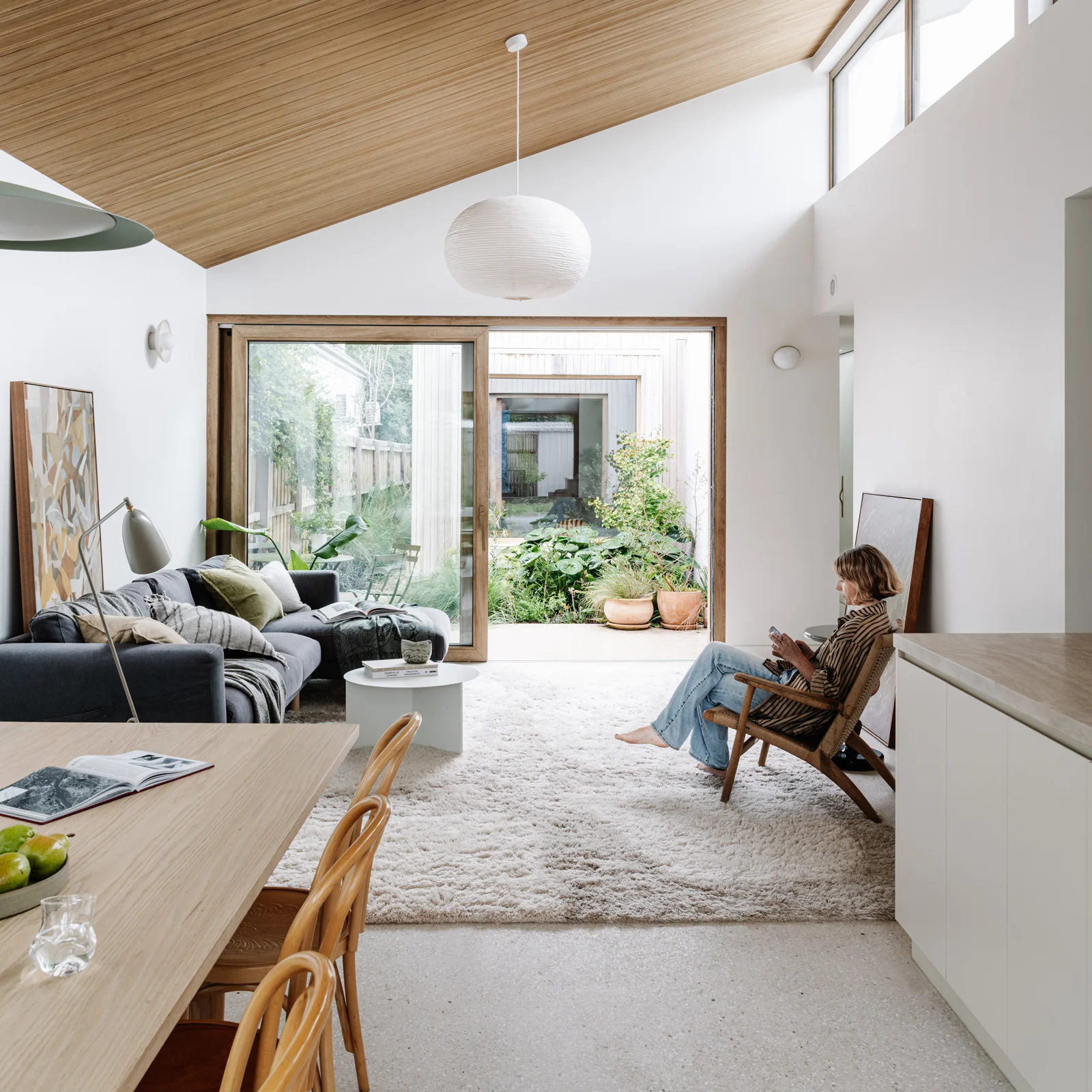
Beneath the raked ceiling, the Geostone Nova floor runs unbroken to the garden doors.
This early engagement and their early product specification allowed the owners to be strategic in their construction planning, creating opportunity for more deliberate decision making and setting an example for industry by ultimately securing a 70% carbon reduction.
It is really important for industry to understand that for us all to work towards a net zero goal, early engagement of all stakeholders is essential.
Importantly, this non-traditional approach allowed the owners to build a program around their low carbon objectives, without compromising performance strength.
As much of the original cottage was kept rather than rebuilt, further environmental impacts were prevented allowing this considered renovation to hold the embodied carbon within the existing structure, rather than having it sent to landfill.
An established eucalyptus was also retained, with part of the slab lifted onto piles to protect its roots.
- Compared with the Australian Life Cycle Inventory (AusLCI) database value for an ordinary Portland cement ready-mix concrete, that is, one with no innovation or supplementary cementitious materials.