Keeping pace with Australia’s regional project pipeline
Mobile plants are the key for complex construction programs that need to keep pace
In a country as vast as Australia, concrete supply to regional and remote major projects can be a complex logistical undertaking, especially when delivering at scale for sites moving at pace.
Challenges such as wet concrete’s short working life and the impacts of long-distance travel on a technical mix can have significant impacts on planning and program when addressed incorrectly.
As a major supplier of concrete Australia-wide, Holcim uses mobile batching plants to ensure the concrete is batched close to where our clients and delivery partners need it most. The short distance reduces travel costs, keeps trucks off the road, supports sustainable construction methods, and importantly, reduces the impact of major construction on the local community.
Moving plants between projects – especially when travelling long distances – is no easy task. Our Major Projects team’s industry-leading approach enables Holcim to mobilise with agility, efficiency and a solutions focus, thanks to their genuine collaboration with clients and community.
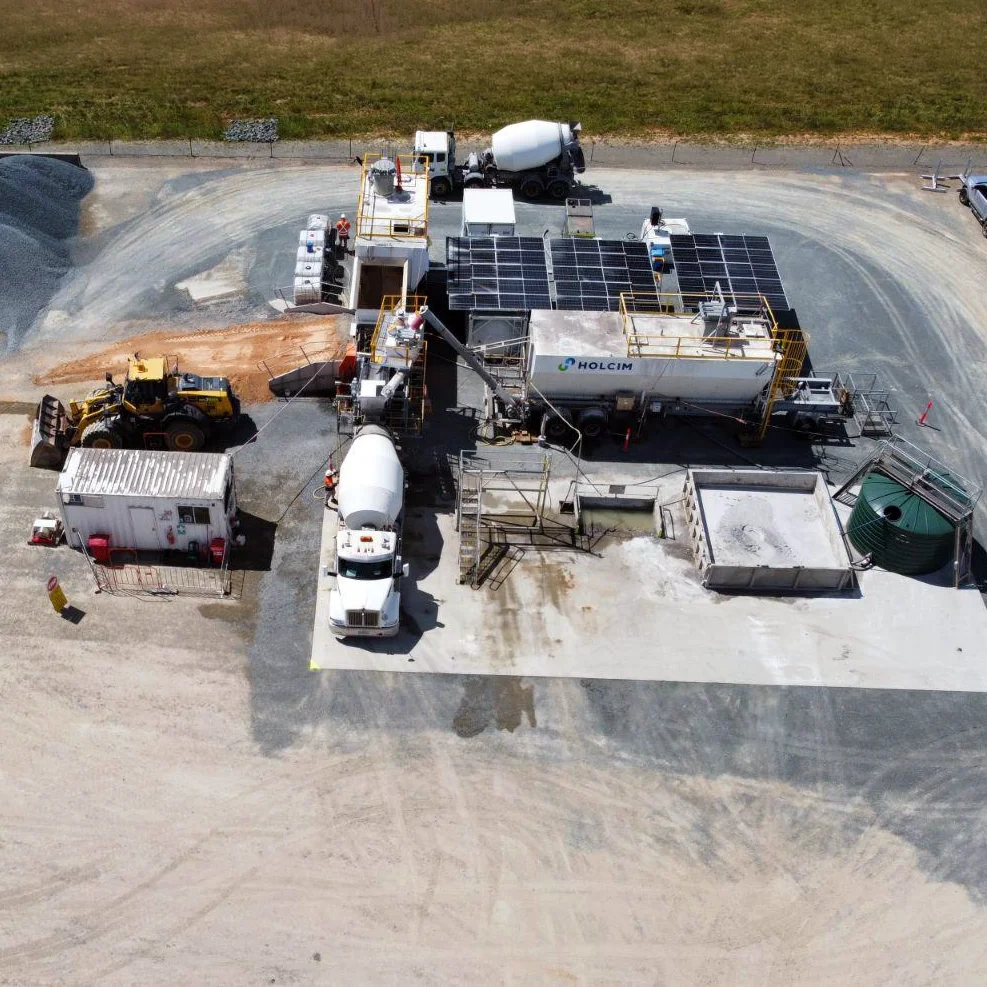
Rooftop solar is the primary power source for the hybrid mobile plant, with battery storage and generators supporting continuous production.
Recently, after completing supply to a major high-voltage transmission line project near Gundagai, one of three mobile plants supplying the project was needed more than 430 kilometres away, in just seven days.
"Our mobile batching plants and assets are designed for efficient mobilisation and demobilisation to ensure we can commence concrete production for our clients immediately at the new site," said Mitch Gimm, Mobile Projects Asset Manager, Holcim.
Having worked closely with the customer to understand their site and supply requirements, together we sequenced each stage, from demobilisation and loading through transport, set-up and commissioning, to ensure the needs of all stakeholders were met.
Our skilled plant personnel were on site at every stage supporting loading, unloading and other activities in each location, keeping the transition seamless and downtime to a minimum.