



Holcim trials hydrogen power at Melbourne Airport
Holcim is trialling a hydrogen power source that's saving over 150 litres of diesel per day on site, compared to a conventionally-powered mobile batch plant.
The trial, run in partnership with Toyota Motor Corporation Australia using a Stationary Hydrogen Fuel Cell Power Generator, EODev's GEH2®, is powering the mobile concrete batch plant supplying Melbourne Airport's Taxiway Zulu 2.0 project.
The Taxiway Zulu project is a significant piece of infrastructure for Melbourne Airport that includes a new taxiway network across the airport's northern precinct to enable future expansion of its international terminal (T2).
Improving aircraft traffic movements also prepares the airport for future runway operations as part of the groundwork for a $3 billion runway project that's expected to nearly double the airport's peak capacity and support tens of thousands of jobs by the mid-2040s.
Holcim is trialling a hydrogen fuel cell generator with Toyota Motor Corporation Australia, saving over 150 litres of diesel per day on the mobile concrete batch plant supplying Melbourne Airport's Taxiway Zulu 2.0 project.

This trial is a tailor-made solution to support Fulton Hogan and Melbourne Airport in this ambitious project.
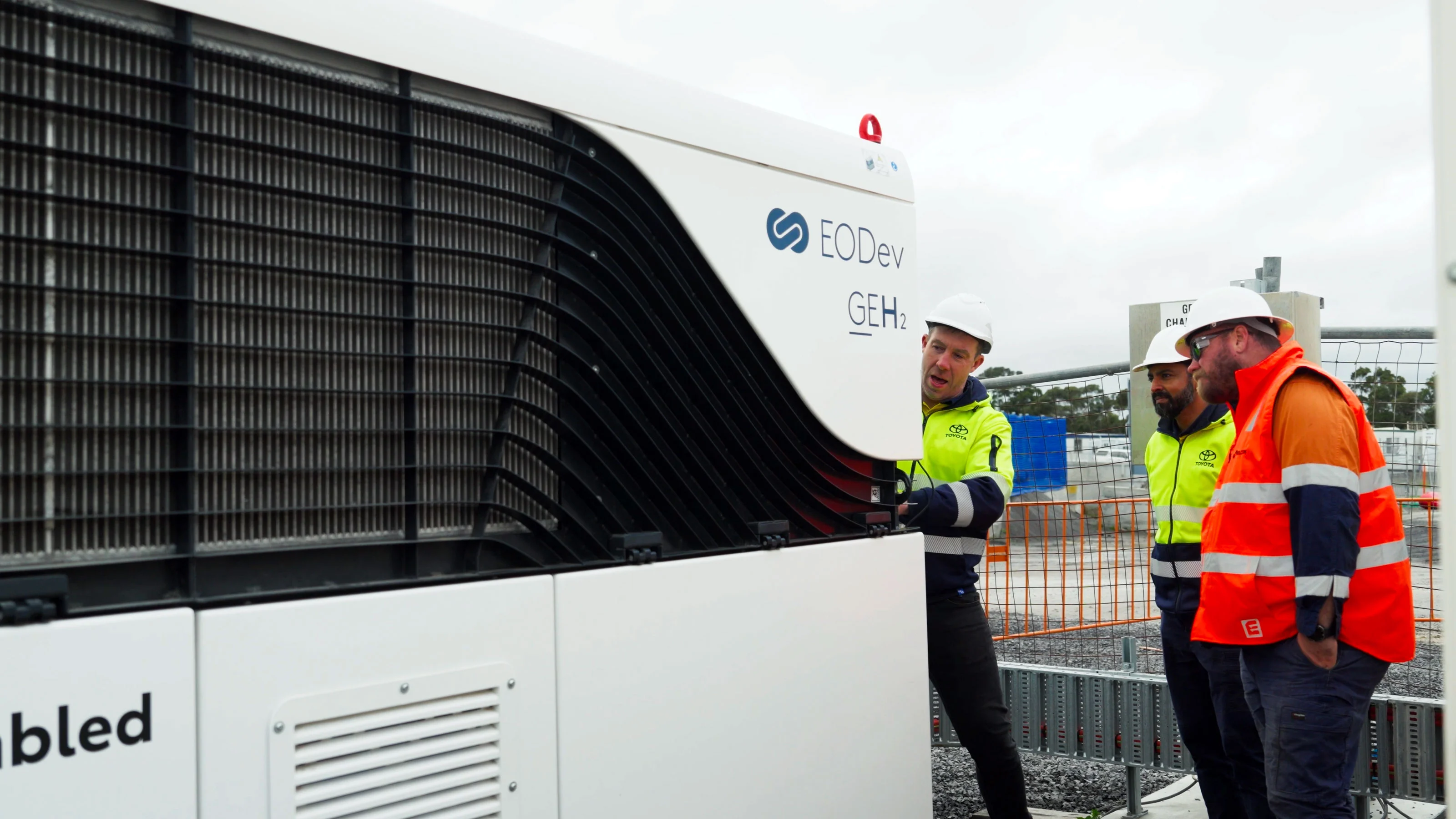
Holcim, supplying Fulton Hogan on the project, has an onsite mobile batch plant producing concrete for multiple project stages. Batching concrete onsite removes the need for a fleet of agitator trucks moving supply through the airport's access roads, reducing congestion and disruption in a live, tightly managed airside environment.
The mobile batch plant itself runs on the GEH2 hydrogen fuel cell generator instead of a standard diesel unit, switching between battery and hydrogen fuel cell power depending on demand.

This kind of innovation is helping decarbonise our operations, both by reducing our reliance on diesel generators and by placing the concrete plant onsite to cut truck movements around the airport precinct.
The trial sits within Holcim's broader, science-driven approach to reaching net zero at the global level, underpinned by 2030 and 2050 CO2 reduction targets validated by the Science Based Targets initiative and a clearly defined roadmap for getting there.
Exploring alternative power sources onsite is one part of how Holcim is working to reduce emissions across its operations.


The GEH2 is consistent, efficient, and reliable. It's ready to go whether we're dealing with high loads or low loads, and it's helping Holcim reduce emissions.
Onsite concrete batching and hydrogen power are helping to deliver a genuinely different way of supplying concrete to complex, highly regulated infrastructure projects, cutting both truck movements and emissions without compromising on reliability.
Find out more about our climate action
Discover how Holcim is reducing emissions and working towards net zero across our operations.