
Circular Innovation Beneath the City
Holcim's low-carbon concrete and the Melbourne Metro Tunnel Project
Melbourne’s Metro Tunnel Project is one of Australia’s largest public transport infrastructure developments. Beneath the city’s streets, new tunnels and stations are being built to expand the electrified rail network and support the city’s continued growth.
Concrete is essential to projects of this scale, but it is also one of the largest contributors to embodied carbon in construction. By supplying innovative low-carbon concrete mixes, Holcim helped the project reduce emissions while maintaining the strength and durability required for major underground infrastructure.
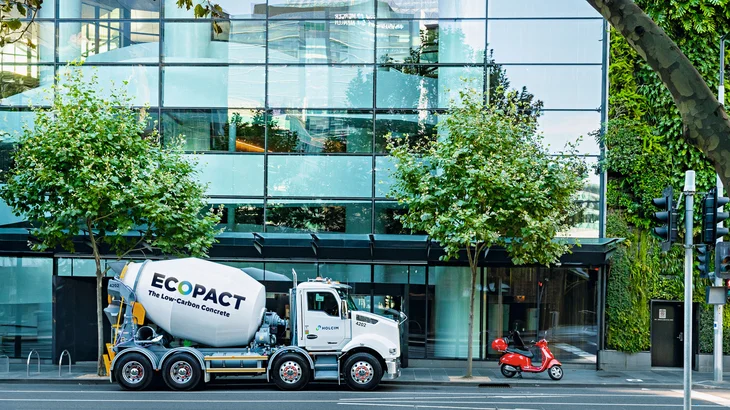
Today, many of the specialised mixes used on the project form part of Holcim’s ECOPact low-carbon concrete range, designed to reduce embodied carbon while maintaining the performance modern infrastructure demands.
The challenge
Building major infrastructure with less carbon
Transport infrastructure plays a critical role in lowering emissions across cities. Electrified rail systems allow large numbers of people to move efficiently while producing significantly fewer emissions than car-based travel.
Watch the 2-minute video: Melbourne Metro Tunnel Project, Low-Carbon Concrete Innovation
However, building new rail infrastructure requires enormous quantities of materials, particularly cement and concrete. For the Melbourne Metro Tunnel Project, the challenge was to deliver the structural performance required for tunnels and underground stations while reducing the project’s carbon footprint and the consumption of raw materials.
Another priority was addressing the global pressure on natural sand resources. Industrial sand is one of the most heavily consumed raw materials in the world, and reducing the demand for virgin sand has become an important goal for more circular construction.
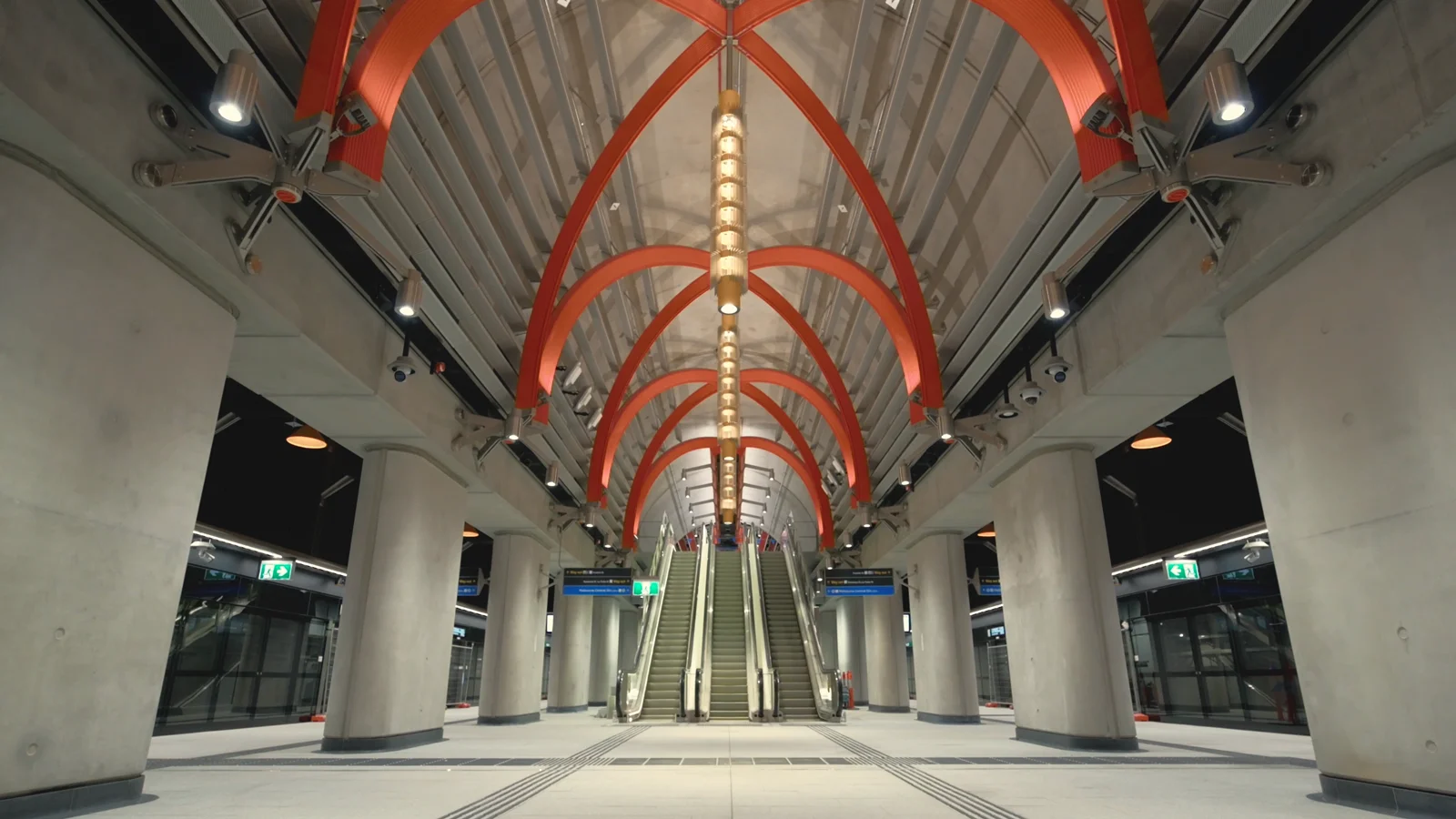
The design includes expansive cavernous platforms with striking orange structural ribs, creating a memorable and highly recognisable underground space.
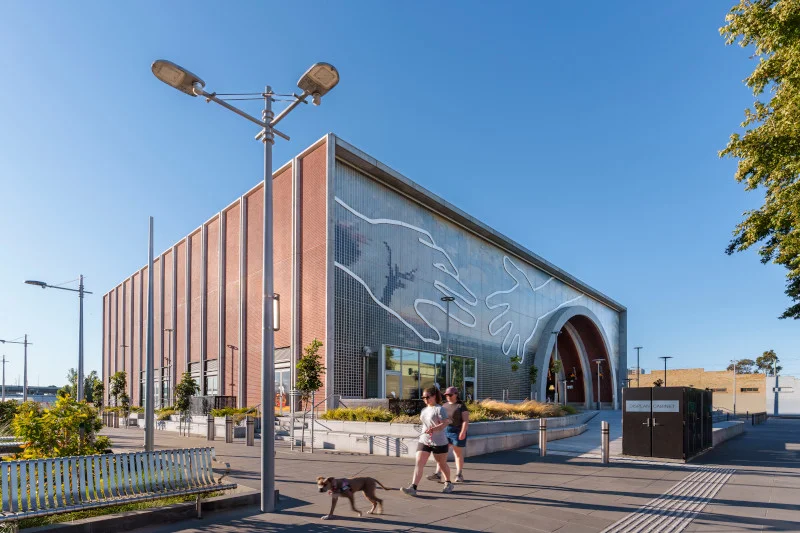
Arden Station, opened in late 2025 as part of the Metro Tunnel project, showcases Come Together by Abdul Abdullah, a massive 36-metre-wide mosaic integrated into the station exterior.
The solution
Innovative low-carbon mixes and recycled materials
Over the first five years of the project, Holcim supplied more than 600,000 cubic metres of ready-mix concrete for tunnels and stations across the Metro Tunnel network. In total, 45 specialised mixes were developed to meet the different structural and construction requirements of the project.
Many of these mixes incorporated high proportions of supplementary cementitious materials to reduce the carbon intensity of the concrete. The result was a 52% reduction in Portland cement across the tunnels and stations, significantly lowering the project’s embodied carbon.
Holcim also worked with Dr Massoud Sofi from the University of Melbourne and industry partners to develop a circular solution: a structural-grade concrete mix containing processed recycled glass.
The mix replaces 25% of the virgin sand normally used in concrete with crushed recycled glass, with no reduction in strength or structural performance. The innovation was used to construct temporary blinding slabs during the building of the new State Library Station.
This marked a world-first application of structural-grade concrete containing recycled glass in a major infrastructure project, with similar materials previously limited to smaller applications such as pavements and local roads.
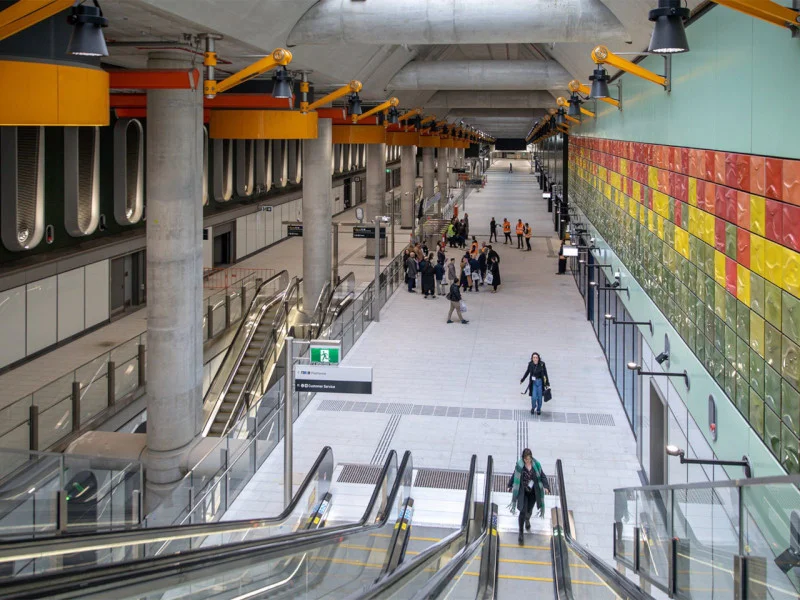
Parkville Station sits beneath Grattan Street, linking the University of Melbourne and the Parkville medical precinct to the Sunbury, Cranbourne and Pakenham lines through the new 9km twin rail tunnels.
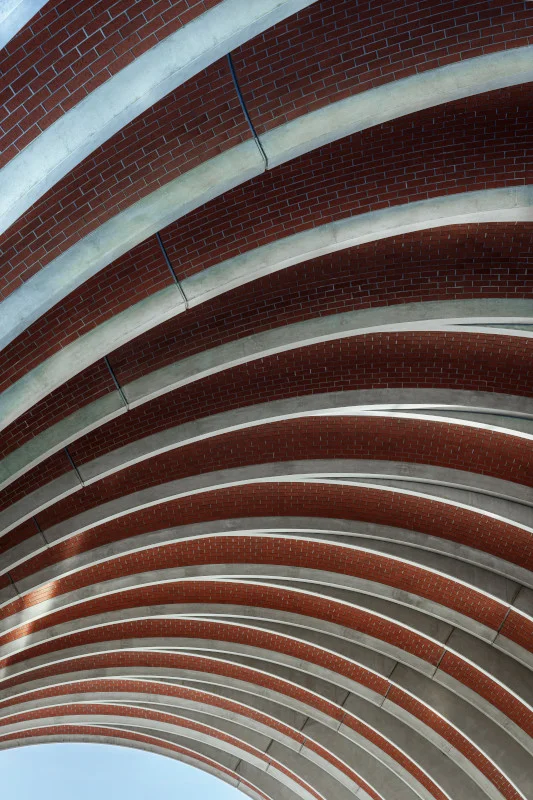
A defining feature of Arden Station, these 15 precast brick archways draw on North Melbourne’s industrial heritage, using more than 100,000 locally manufactured bricks and integrated skylights to bring natural light into the station below.
The result
Cutting emissions and advancing circular construction
Holcim’s low-carbon concrete solutions contributed to a reduction of approximately 150,000 tonnes of CO₂ emissions across the Metro Tunnel Project, equivalent to the annual emissions of more than 8,500 Australian homes. The project also demonstrated how circular material innovation can be applied at scale in major infrastructure.
Once complete, the Metro Tunnel will connect Melbourne’s west and southeast via five new underground stations, creating capacity for an additional 500,000 passengers per week during peak periods.
By enabling more people to travel by electrified train instead of car, the project will continue to reduce emissions across the city’s transport network for decades to come.
Supporting the transition to lower-carbon construction
Projects such as the Melbourne Metro Tunnel demonstrate how innovative materials can help cities reduce the environmental impact of major infrastructure while maintaining performance and durability.
Holcim continues to develop solutions that support this transition, and help engineers, builders and developers reduce embodied carbon while delivering the strength and reliability modern construction demands.